
Discover
Interviewed stakeholders and tested customer expectations around custom equipment, account states and team purchasing.
Led research and experience design for the customization platform behind Wilson’s custom baseball glove journey, balancing player creativity, product rules and a confident path to purchase.
 05
05The visual story is presented in the order the product was designed: hand sketches, architecture, reusable wireframe states and the final custom-equipment experience.
Fast, low-cost exploration established the account, team and customization concepts before detailed design.
The sitemap connected commerce, account and team states into one coherent system.
Reusable structures defined how recognized and unrecognized users moved through the experience.
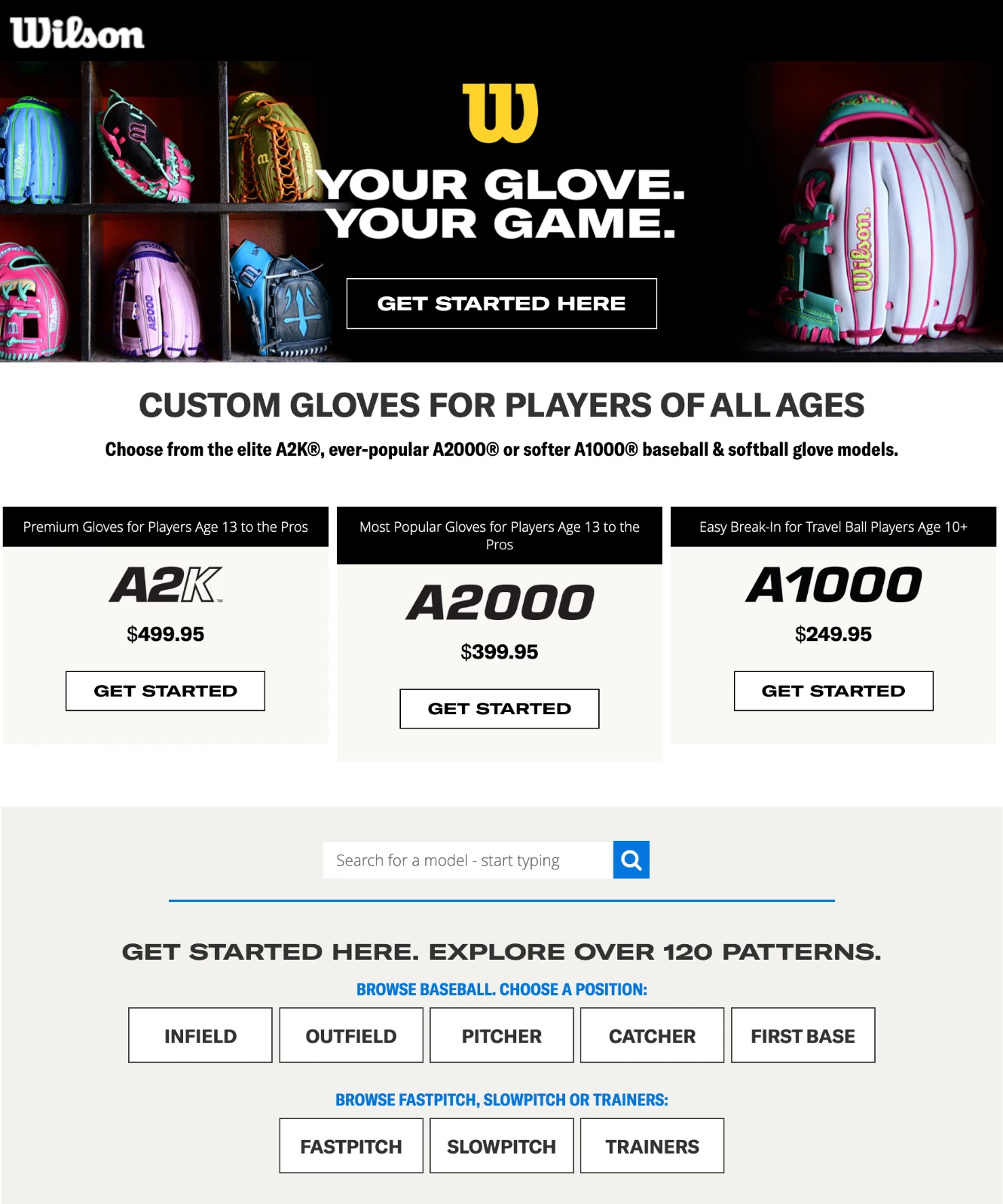
The final path carried a configured product through a secure checkout experience.
A custom baseball glove is a deeply personal product, but the number of choices can quickly overwhelm a customer. Model, pattern, web, color, lacing, embroidery and other options all have dependencies and manufacturing constraints.
The product experience needed to help players explore possibilities, understand tradeoffs and trust that the final configuration would match what they intended to order.
On an agency engagement, I led focus groups, stakeholder interviews and usability testing for the experience that became Wilson’s customization engine. I translated what customers and internal teams needed into the architecture, patterns and interaction model supporting custom gloves.
Interviewed stakeholders and tested customer expectations around custom equipment, account states and team purchasing.
Organized the experience around customer intent and progressive decisions rather than exposing the entire product rule set at once.
Created site architecture, reusable patterns, recognized-user states, product selection, configuration and checkout concepts.
Used testing and stakeholder review to make customization choices clearer and reduce ambiguity before purchase.
The experience connected category discovery, model selection, product configuration, account behavior and checkout into one coherent commerce journey. Wilson continues to use the custom equipment engine today, providing durable evidence that the research and interaction model supported both customers and the business.
A configurator succeeds when the underlying complexity disappears. The customer should feel in control of a creative process while the system quietly protects product and manufacturing rules.