
Discover
Facilitated focus groups and workflow sessions across three offices to understand regional differences, exceptions and the hidden knowledge embedded in the legacy application.
Re-architected a mission-critical buying platform so global buyers could negotiate and formalize merchandise deals from the field instead of returning to regional offices.
 06
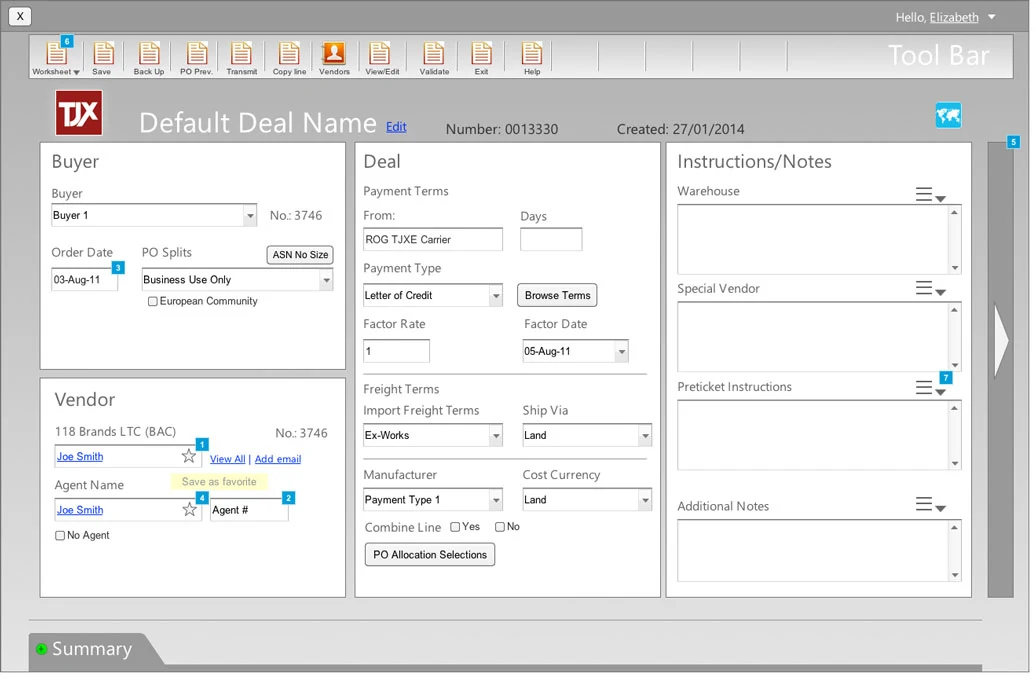
06The system evidence moves from the MS-DOS baseline through detailed buying workflows and into the final cloud-based interface buyers could use in the field.
The original system established the density, terminology and operational rules that had to be preserved during modernization.
Detailed screens captured deal creation, line editing, templates, search and retrieval before the core experience was finalized.
The final interface simplified access, recent work and deal creation for global buyers.
TJX buyers traveled globally to source merchandise and negotiate directly with manufacturers. The core purchasing system, however, was still tied to an aging MS-DOS environment. Buyers often had to return to London, Boston or another regional office before the agreement could be formally entered and circulated.
That delay created real business risk. Exchange rates could move, suppliers could reconsider verbal agreements, and valuable buying opportunities could weaken before paperwork caught up with the negotiation.
I was responsible for understanding how the legacy system actually worked, facilitating research with buyers across Chicago, Boston and London, and translating those findings into a modern cloud-based experience that could travel with the buyer.
Facilitated focus groups and workflow sessions across three offices to understand regional differences, exceptions and the hidden knowledge embedded in the legacy application.
Mapped the buying lifecycle, separated essential deal information from system noise, and identified the moments that needed to work away from a corporate desktop.
Re-architected complex purchasing workflows into a clearer tablet-ready experience, including login, deal creation, buyer lines, vendor information and review states.
Aligned the redesigned interface with cloud migration goals so product and engineering teams could modernize the platform without losing critical operational logic.
The redesigned platform armed buyers with a portable, cloud-based workflow that supported faster contract creation while they were still close to the supplier and the negotiation. It reduced dependence on regional offices, shortened the gap between agreement and documentation, and lowered the exposure created by currency movement and delayed follow-through.
This was not a cosmetic redesign. The value came from preserving the buying intelligence inside a decades-old system while removing the location constraint that kept global buyers from closing the loop in the field.