
Understand
Worked from pharmacy workflows and detailed requirements to identify actors, decisions, queues and exception states.
Translated complex pharmacy operations into coherent workflows across intake, patient search, prescription review, renewals, fill history and audit states.
 02
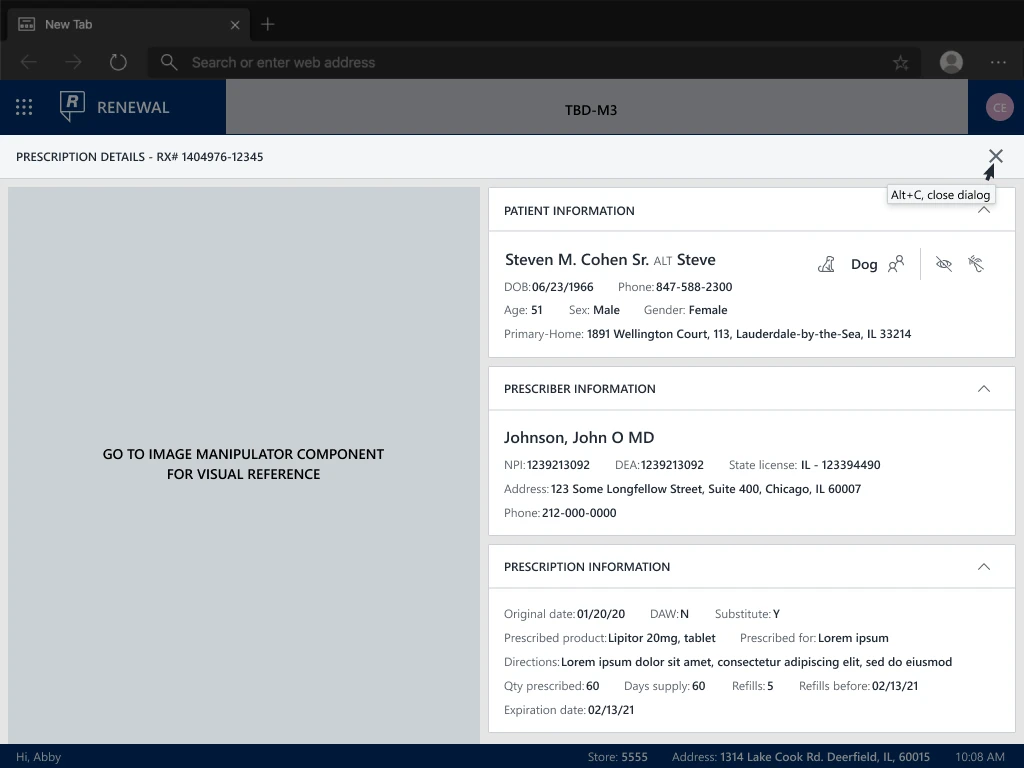
02The evidence is sequenced from workflow logic to operational screens, showing how the pharmacy system moved from architecture into executable interface states.
Boxes, arrows and decision paths made high-consequence pharmacy behavior visible before interface details were finalized.
Core screens translated the workflow into clear, repeatable pharmacy tasks.
The platform had to coordinate dense patient, prescriber, product and prescription information while helping pharmacy teams move through high-volume work. Every shortcut, status and exception needed to be understandable because small errors could have serious operational consequences.
The UX work therefore focused on the entire workflow, not isolated screens: how information entered the system, how it was reviewed, where decisions occurred and how staff recovered from exceptions.
I turned detailed business and operational requirements into usable system behavior. That included research synthesis, flow architecture, interaction design, screen states, prototyping and close communication with stakeholders and delivery teams.
Worked from pharmacy workflows and detailed requirements to identify actors, decisions, queues and exception states.
Created task flows for intake and data review so the team could see dependencies before visual design began.
Developed patient search, prescription intake, Rx detail and fill-history experiences with clear hierarchy and action states.
Translated system logic into implementation-ready screens and reusable patterns that engineering teams could execute.
The work established workflow architecture across multiple pharmacy use cases and gave cross-functional teams a shared model of how data, decisions and interface states fit together. It made a dense healthcare environment easier to reason about, discuss and build.
The strongest enterprise UX work often looks inevitable after it is done. The hard part is finding the structure that makes dozens of rules and exceptions feel understandable in the moment.