
Discover
Observed how reservations, arrival, intake and repair information moved through the store. Led focus groups and user testing with the people responsible for each handoff.
Led the UX work for a connected service ecosystem spanning reservations, in-store kiosks, counter intake and the teams responsible for diagnosing and repairing customer equipment.
 07
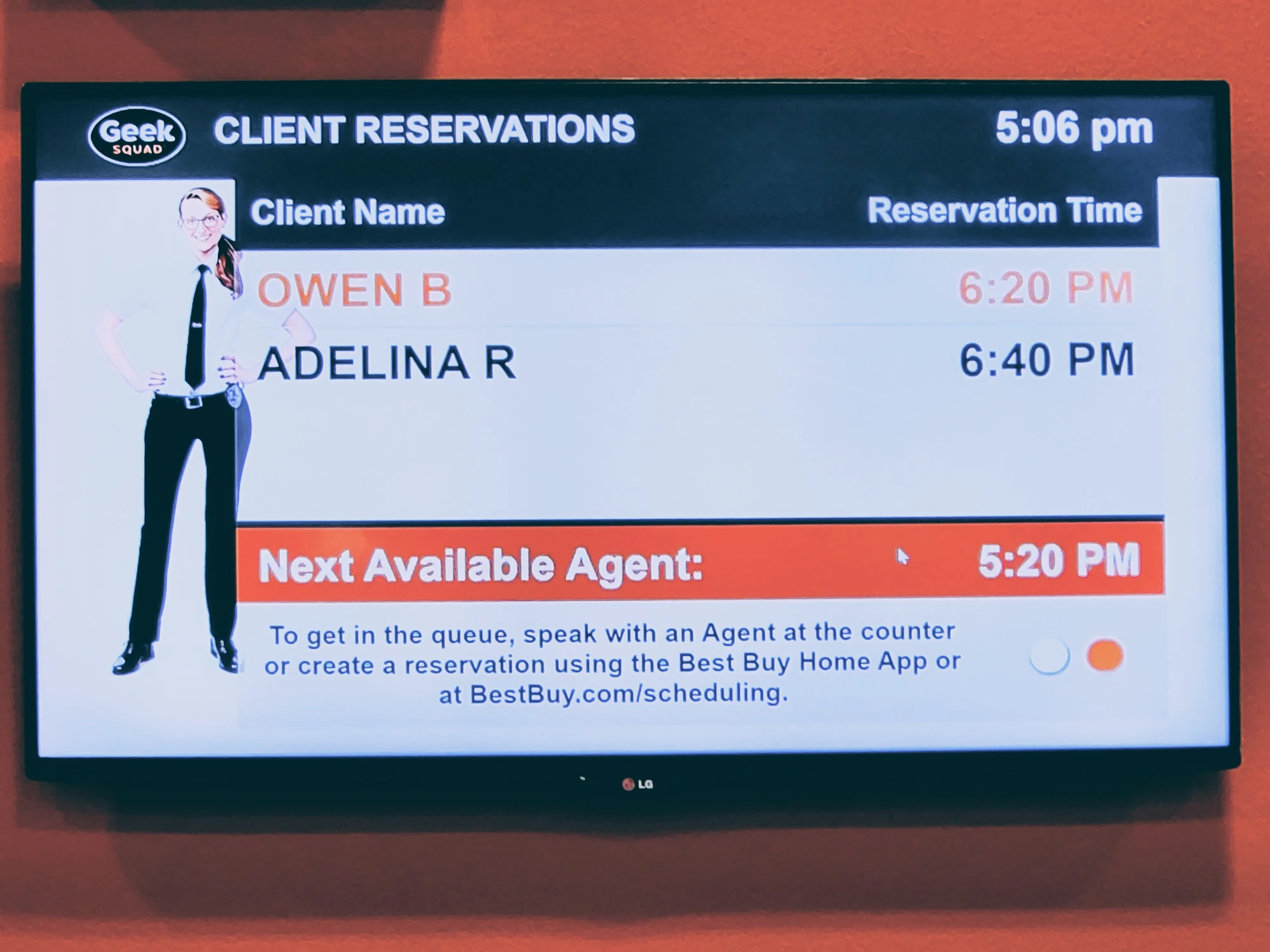
07The visual sequence begins with the wireframes that defined intake and service decisions, then ends with the connected reservation and production views used in-store.
The core screens defined agent access, customer identity, communication preferences, agreements, issue capture and recommendations.
Reservation and production views connected the customer-facing experience to front-counter and repair operations.
Customers needed to reserve a time, arrive at the store and check in without confusion. Counter agents needed accurate information to intake a device and explain service options. Back-of-house technicians needed the same information to diagnose, repair and update the job.
The redesign had to make those touchpoints behave like one connected service rather than separate applications that happened to share data.
As the only onshore UX resource, I led focus groups and usability testing, synthesized the findings, established the experience architecture and directed a nearshore team of designers in Buenos Aires. I served as the bridge among frontline users, business stakeholders, engineering and design execution.
Observed how reservations, arrival, intake and repair information moved through the store. Led focus groups and user testing with the people responsible for each handoff.
Mapped the end-to-end service journey across customers, counter agents and technicians, then identified where missing or inconsistent information created friction.
Defined workflows for kiosk check-in, agent login, alternate-client handling, contact preferences, client agreements, issue capture and service recommendations.
Translated research into clear direction for the Buenos Aires design team, reviewed work and maintained consistency across a multi-role enterprise platform.
The experience connected reservation and kiosk behavior to counter intake and downstream repair operations. The strongest validation is longevity: the core system and workflows remain in use today, demonstrating that the architecture was practical enough to survive changing stores, teams and technology.
The design challenge was orchestration. Each screen had to help the person using it while protecting the quality of information needed by the next person in the service chain.