
Understand
Facilitated stakeholder discovery and synthesized needs across patients, caregivers, clinicians and business teams.
Led discovery and experience definition across patient, caregiver, clinician and business needs, translating research into journeys, personas, concepts and implementation-ready wireframes.
 08
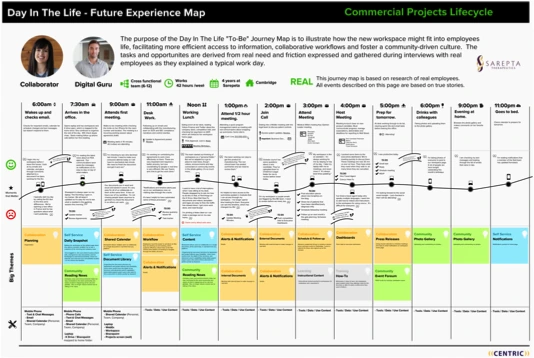
08Hand sketches lead the story, followed by the research models and wireframes that translated a sensitive multi-audience ecosystem into a shared product direction.
Sketching made the emerging experience tangible before teams invested in detailed interface work.
Personas and journeys aligned patient, caregiver, clinician and stakeholder needs around one experience model.
Implementation-oriented wireframes turned the shared model into a product teams could evaluate and build.
Patients and caregivers needed understandable guidance during an emotionally charged journey. Clinicians needed reliable information and efficient pathways. Business and content teams needed a structure that could work within regulatory constraints.
Without a shared experience model, each team risked optimizing its own content or feature while the larger patient journey remained fragmented.
I led discovery and experience definition, connecting stakeholder interviews, patient and caregiver needs, journey mapping, persona development, concept exploration and wireframing. My responsibility was to turn a complex problem space into a direction teams could actually use.
Facilitated stakeholder discovery and synthesized needs across patients, caregivers, clinicians and business teams.
Documented key moments, pain points, questions and handoffs across the broader experience.
Created personas and opportunity areas that gave teams a common language for prioritization.
Moved the strategy through sketches and wireframes so research became a practical bridge to implementation.
Journey maps, personas, sketches and wireframes created a shared foundation for product, content, design and technology decisions. The deliverables clarified what the ecosystem needed to support and helped move a sensitive, regulated initiative from ambiguity toward implementation.
In sensitive healthcare work, empathy is not a decorative layer. It changes how information is sequenced, how decisions are framed and how confidently people can move forward.